







Measured Results Across Four BESS-Supported Wells

Compared with the pre-BESS baseline well, the four BESS-supported wells recorded lower diesel use, lower natural gas use and fewer GHG emissions per unit of power produced.

Fuel icon

37–48%

Reduction in diesel consumption.

Flame icon

19–26%

Reduction in natural gas consumption.

growing plant icon

26–29%

Reduction in GHG emissions.

dollar icon

~US$100K

Potential additional annual savings per rig*.

Precision Drilling and the Project

Precision Drilling is a major onshore drilling contractor with operations across Canada, the United States and the Middle East. At the end of 2023, its contract drilling segment included 214 land drilling rigs, including 97 in Canada, 104 in the United States and 13 in the Middle East.

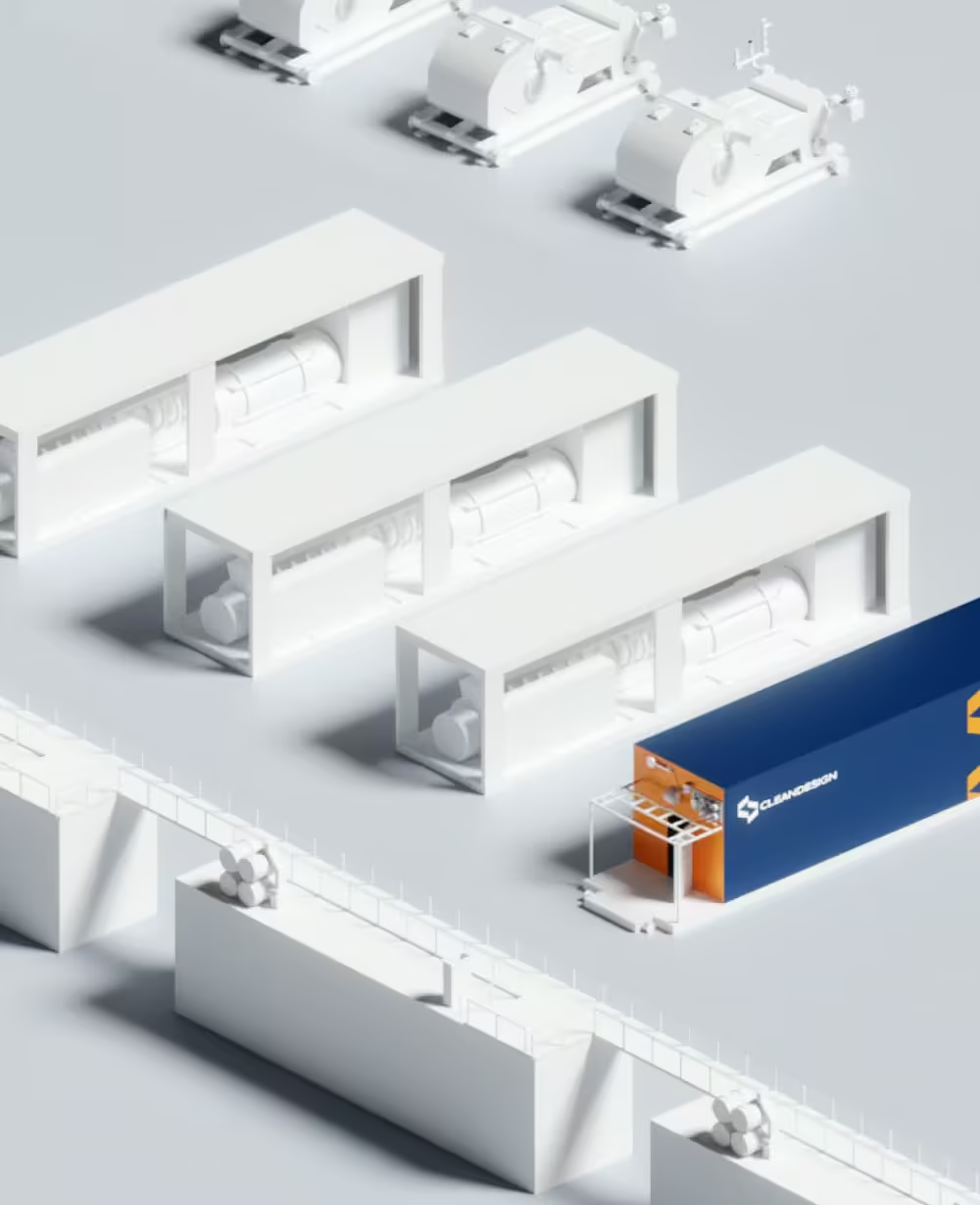
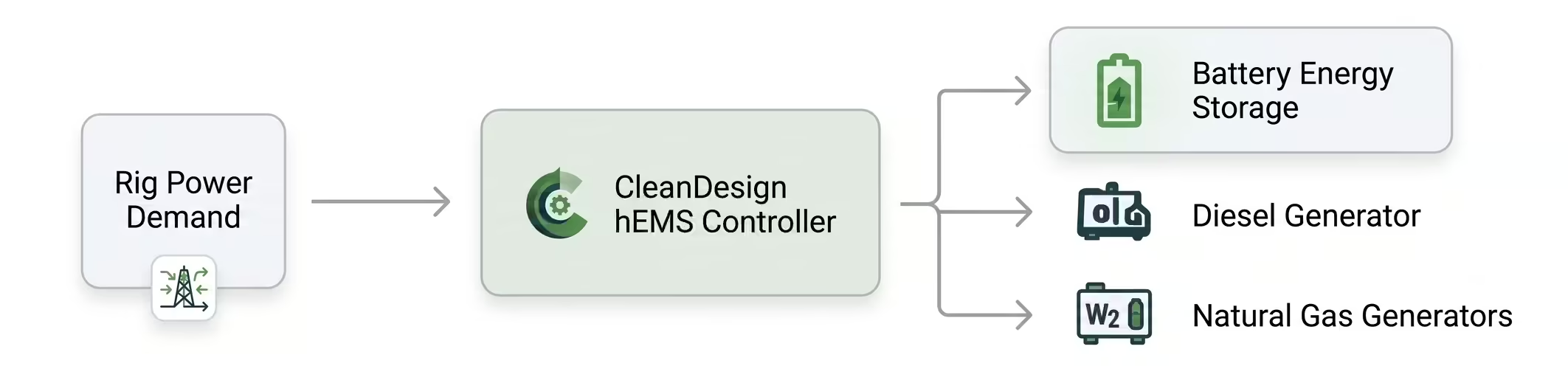
At the Colorado site covered by this study, the operator used one diesel generator and two natural gas generators to produce electricity for drilling operations. The project examined whether battery storage and automated generator dispatch could reduce the number of generators running while continuing to meet the rig’s changing power demand.

CleanDesign hEMS was used to monitor power requirements, control generator launch and shutdown, supply short load spikes from the battery and charge the battery when demand was lower.


Precision Drilling logo
Existing diesel and natural gas generation retained

Major North American drilling contractor

Operations in Canada, the U.S. and the Middle East

Operations in Canada, the U.S. and the Middle East

Operations in Canada, the U.S. and the Middle East

214 land drilling rigs at the end of 2023

Operations in Canada, the U.S. and the Middle East

Existing diesel and natural gas generation retained

Reducing generator runtime without disrupting rig power

Reducing Generator Runtime Without Disrupting Rig Power

Drilling and tripping create rapid changes in power demand. Under the pre-BESS setup, three generators remained available to cover these peaks, even when the rig’s normal power requirement was lower.

This increased engine runtime and caused generators to operate below their most productive load. The diesel generator also had to be started when the two natural gas generators could not meet a high-demand event.

The project needed to:

  • Handle short and sudden power spikes
  • Reduce the number of generators operating at the same time
  • Keep sufficient power available throughout drilling and tripping
  • Lower diesel and natural gas consumption
  • Reduce GHG emissions without replacing the existing generator setup

How the Battery System and hEMS Were Deployed

1

Establish the baseline

A pre-BESS well was used to record generator use, power production, fuel consumption and GHG emissions.

2

Complete the offset analysis

The operator and Precision Drilling reviewed a comparable drilling profile to understand the expected load and generator requirements.

3

Integrate battery storage

The battery energy storage system was added alongside the rig’s existing diesel and natural gas generators.

4

Connect hEMS controls

CleanDesign hEMS monitored real-time power demand and controlled when generators were launched or shut down.

5

Use the battery for load spikes

The battery supplied short transient loads and charged during periods when electricity demand was lower.

6

Compare performance

Four BESS-supported wells were compared with the pre-BESS baseline using fuel consumption and emissions per kilowatt-hour.

Fewer Generators Online During Drilling and Tripping

The battery did more than store electricity. It allowed hEMS to change how and when the rig’s generators operated.

Drilling operation

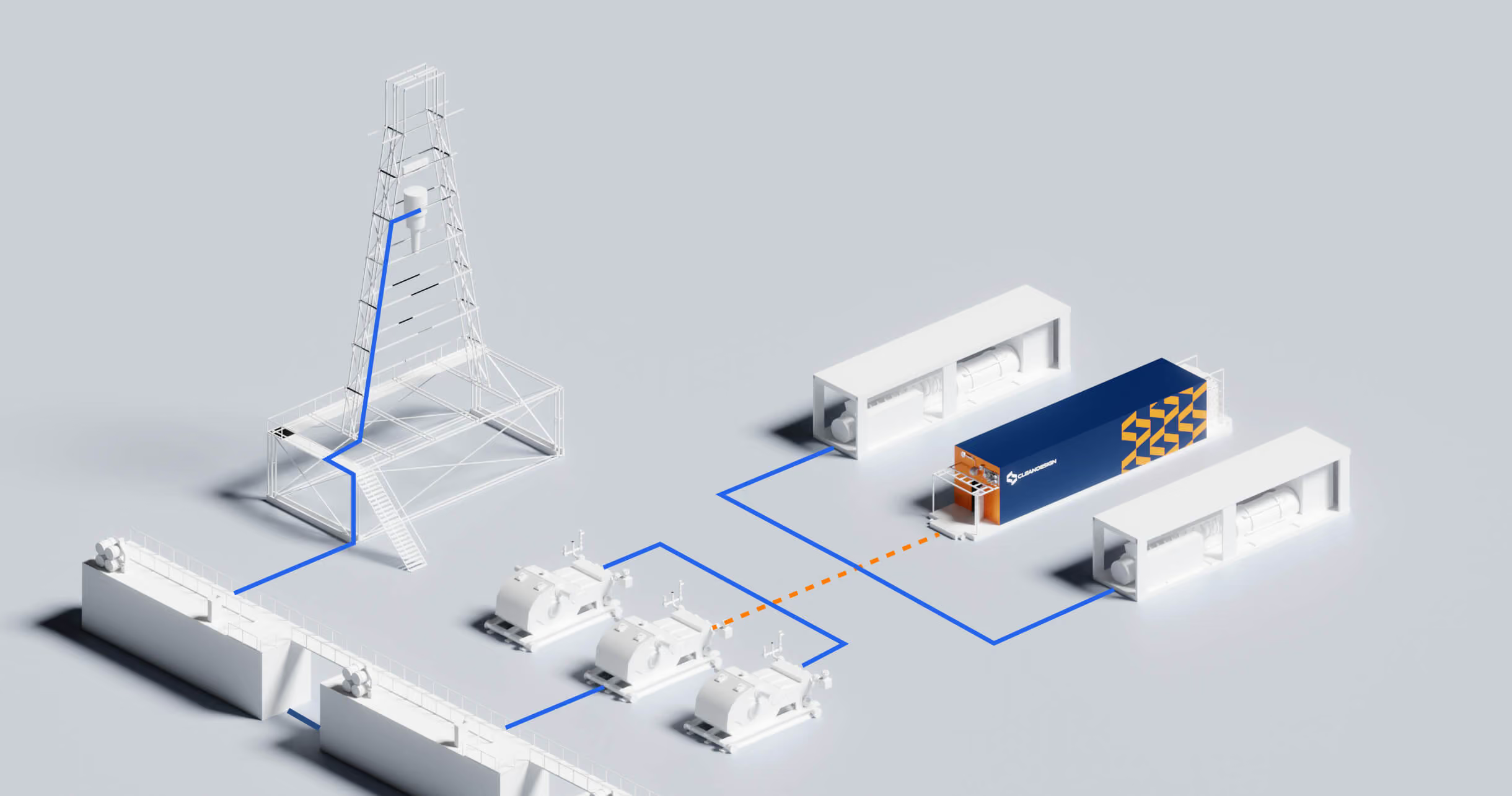
Before the BESS deployment, three generators handled the drilling load. With the battery and hEMS in place, two generators and the BESS handled a similar load profile, allowing the diesel generator to remain offline during the comparison shown in the study.

Tripping operation

Before the deployment, three generators were used during tripping. With hEMS, one generator and the BESS handled the load spikes, removing one diesel generator and one natural gas generator from active operation during the comparison.

Fewer Generators Online During Drilling and Tripping

Performance Normalized by Electricity Produced

The study compared each BESS-supported well with the pre-BESS baseline. Fuel consumption and emissions were measured per kilowatt-hour so the wells could be compared on the same basis.

Comparison of Pre-BESS baseline performance with BESS Wells 1 through 4.
Metric Pre-BESS
baseline
BESS
Well 1
BESS
Well 2
BESS
Well 3
BESS
Well 4
Diesel consumption 0.027 gal/kWh 0.015 0.017 0.015 0.014
Diesel reduction Baseline 44% 37% 44% 48%
Natural gas consumption 12.45 scf/kWh 10.08 9.23 9.97 9.77
Natural gas reduction Baseline 19% 26% 20% 22%
GHG emissions 2.22 lbs/kWh 1.65 1.58 1.62 1.57
GHG reduction Baseline 26% 29% 27% 29%

Across the four BESS-supported wells:

  • Diesel consumption fell by 37–48%
  • Natural gas consumption fell by 19–26%
  • GHG emissions fell by 26–29%

From Baseline Assessment to Four-Well Validation

Phase 1

Baseline well recorded

The team measured power production, diesel use, natural gas use and emissions under the existing three-generator setup.

Phase 2

Battery and controls integrated

The BESS and hEMS controls were connected to the rig’s existing generation equipment.

Phase 3

Drilling load tested

The project compared a three-generator drilling profile with a two-generator and BESS profile.

Phase 4

Tripping load tested

The system used one generator and battery power to handle the repeating load spikes associated with tripping.

Phase 5

Four BESS wells reviewed

Performance from four BESS-supported wells was normalized and compared with the pre-BESS baseline.

Phase 6

Broader deployment data collected

CleanDesign states that it had 22 deployed units in its 2024 oil and gas portfolio. The attached Precision study itself covers four BESS-supported wells, so the page should not claim that all 22 units were Precision Drilling rigs unless the client confirms it.

Precision Drilling’s View of Battery Energy Storage

quote
Precision Drilling plans to adopt battery energy storage as a standard piece of equipment on its drilling rigs.
Shuja Goraya
CTO, Precision Drilling
PC Dark

What the Deployment Demonstrated

Battery storage can handle transient demand

Battery storage can handle transient demand

Short load spikes do not always require another generator to remain online. The battery can supply these brief peaks and recharge when demand falls.

Automated dispatch reduces unnecessary runtime

Automated dispatch reduces unnecessary runtime

hEMS starts and stops generators according to real-time demand, reducing the number of engines operating when the full generator capacity is not required.

Existing generators can remain in place

Existing generators can remain in place

The project added battery storage and controls alongside the operator’s existing diesel and natural gas generators rather than replacing the complete power system.

Results should be normalized

Results should be normalized

Measuring fuel consumption and emissions per kilowatt-hour provides a clearer comparison between wells with different total power output.

Performance depends on the rig profile

Performance depends on the rig profile

The highest result from one well should not be treated as a fixed outcome for every deployment. Generator mix, drilling activity and transient-load patterns affect the final reduction.

Results Reported by Another Major Drilling Contractor

The Precision Drilling study is supported by separate public reporting from Helmerich & Payne.

In its 2023 Sustainability Report, H&P stated that multiple rigs using CleanDesign hEMS produced approximately 15% fewer GHG emissions. The rigs avoided around 3,800 metric tons of GHG emissions and reduced engine runtime by approximately 30,000 hours during the reporting period. H&P identifies CleanDesign as the provider of the hEMS used in the project.

clean energy solutions

Sources used for this case study

  1. Precision Drilling / EverGreen Energy case-study PDF
    Baseline method, generator comparisons and the four-well performance data.
  2. CleanDesign oil and gas page
    CleanDesign’s connection to Precision Drilling, the ~$100,000 potential annual saving and wider hEMS deployment context.
  3. CleanDesign homepage
    Approved Shuja Goraya quotation and Precision Drilling relationship.
  4. Precision Drilling 2023 Annual Report
    Company background and reported fleet size.
  5. H&P 2023 Sustainability Report
    Separate drilling deployment using CleanDesign hEMS.

Methodology statement

The measured percentages compare four BESS-supported wells with one pre-BESS baseline well. Diesel consumption, natural gas consumption and GHG emissions were normalized per kilowatt-hour of electricity produced.

The results show an observed deployment range, not a fixed result for every rig. Performance can change according to generator type, drilling activity, load profile, fuel pricing and site conditions.

Frequently asked questions

How did hEMS reduce diesel consumption?

hEMS used battery power to handle transient loads and controlled when generators were started or shut down. During the drilling comparison, two generators and the BESS handled the load instead of three generators, allowing the diesel generator to remain offline.

Did the operator have to replace its existing generators?

No. The battery system and controls were integrated with the existing diesel and natural gas generator setup.

How many wells were included in the study?

The attached study compares four BESS-supported wells with one pre-BESS baseline well. CleanDesign separately reports 22 deployed units in its broader 2024 oil and gas portfolio.

Where does the ~$100,000 saving come from?

The figure is published on CleanDesign’s oil and gas page as potential additional annual savings per rig based on carbon-related cost assumptions. The attached PDF verifies the fuel and emissions percentages but does not provide the ~$100,000 calculation.

Can the results differ on another drilling rig?

Yes. The reduction depends on the rig’s load profile, generator configuration, operating cycle and the amount of transient demand that can be handled by battery storage.

Let’s get in touch

Explore What hEMS Could Deliver Across Your Rig Fleet

CleanDesign hEMS combines battery storage, generator automation and real-time power controls to reduce unnecessary generator runtime on drilling rigs. Talk with the CleanDesign team about your existing generator setup, rig load profile and deployment requirements.

clean energy solutions