
The Challenge: Overcoming Grid Limitations in EV Charging
Solving power constraints within EV fleet charging infrastructure.
The Challenge
EV charging infrastructure and EV fleet charging systems often face grid power constraints, especially when multiple vehicles need to charge at once. These power limitations can reduce station capacity, create poor charging conditions, cause service delays, increase operating costs, and limit revenue potential, particularly in remote or high-demand locations.
Our Engineered Approach
For EV fleet charging operators, bus fleets, truck fleets, and mixed fleets, proven high-capacity charging requires more than chargers alone. CleanDesign's hEMS supports BESS EV charging and smart EV charging by using battery energy storage and intelligent energy management to overcome grid limits during peak demand and enable continuous charging of up to 30 vehicles with 1.5MW+ of power.
Hybrid Energy Management for Smart EV Fleet Charging
CleanDesign's hEMS supports EV fleet charging and BESS EV charging by connecting to gridlines when peak demand exceeds available power. Using battery storage and intelligent energy management, hEMS helps charging sites handle large surges while maintaining consistent service.
CleanDesign's hEMS supports EV fleet charging systems and BESS EV charging for six-to-eight Level 3 stations at full capacity, overcoming grid limits. This helps commercial sites increase capacity, smooth peak loads, and keep fleets charging consistently for daily operations.
Enhanced Charging Capacity, Lower Energy Costs
15+
Vehicles Continuously Charged
hEMS can boost grid power capacity, enabling simultaneous charging of up to 15 electric vehicles without interruptions. The system can also support EV fleet charging for buses and trucks depending on client requirements.
2MW
2MW Peak Power Handling
CleanDesign’s system can boost grid power to handle up to 2MW of additional power on demand, helping deliver reliable smart EV charging during peak demand periods.
50%
Up to 50% Cost Savings
By charging battery storage during off-peak hours and using stored power during peak periods, hEMS can reduce energy costs by up to 50% for commercial EV charging infrastructure.
6–8
6–8 Level 3 Charging Stations
The hEMS system supports six-to-eight Level 3 charging stations at full capacity, helping operators exceed current EV charging infrastructure limitations.
Optimized for Peak Performance
Leverage smart EV charging technology for uninterrupted, high-output EV charging service.
Smart Charging for Maximum Savings
CleanDesign hEMS technology offers smart EV charging abilities by charging our battery during the night. With smart EV charging, you are prepared to meet peak power demand during the day, supporting EV fleet charging at scale.
Integrated Power Management for Peak Demands
CleanDesign's hEMS technology is designed to handle large surges in power demand, ensuring your lower-emission and smart EV charging infrastructure operates smoothly even during peak usage times. Whether it's accommodating multiple vehicles at once or dealing with unexpected power spikes, our system provides consistent EV fleet charging for uninterrupted service.
EV Charging Technology
Why Choose CleanDesign for EV Charging?
CleanDesign's proprietary EV charging management software is at the core of our technology, ensuring integrated and high-output energy management.
Fast and Flexible Deployment
Mobile EV charging service that can be installed quickly.
Optimized Energy Utilization
CleanDesign’s system supports peak shaving, enabling batteries to charge at night when cost of power is low.
Driving the EV Revolution
Promotes the use of EVs through a robust and proven commercial charging infrastructure.
CleanDesign’s Innovation
Smart Software for EV Charging
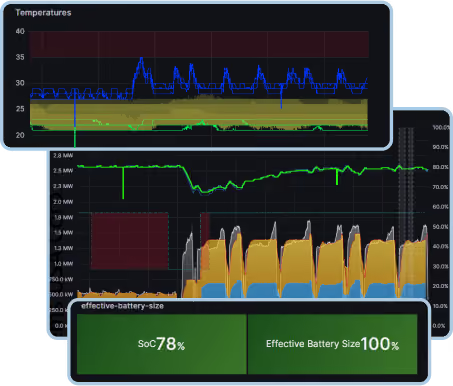
CleanDesign's proprietary software is at the core of our EV charging technology, ensuring integrated and high-output energy management. Our advanced software ensures that your lower-emission EV charging infrastructure is always optimized for peak performance.
Real-Time Optimization
Dynamically adjusts power loads to meet charging demands, maximizing efficiency.
AI-Driven Learning
Learns from usage patterns to continuously improve performance.
Peak Demand Handling
Effectively manages power spikes, preventing outages and ensuring consistent charging.
Predictive System Maintenance
Monitors system health to reduce downtime and keep your charging stations running smoothly.
Let’s get in touch
Ready to Transform Your Energy Management?
Contact us today to explore how CleanDesign can power your future through lower-emission and smart EV charging infrastructure.

Frequently Asked Questions
1. How does hEMS improve existing EV charging infrastructure?
Our hEMS technology acts as a smart EV charging power booster for the grid. It mitigates grid power limits by using battery storage to handle peak demand, allowing stations to support high-capacity Level 3 charging even in areas with restricted power access.
2. What are the benefits of smart software managing charging infrastructure?
CleanDesign’s proprietary software optimizes energy flow in real time for EV fleet charging solutions. It enables smart EV charging by automatically scheduling battery charging during off-peak hours, when electricity is cheapest, and discharging during the day to power vehicles efficiently.
3. Can your system support EV fleet charging solutions for large vehicles?
Yes. Our system is designed for high-output EV fleet charging performance, capable of handling 1.5MW+ of power. This makes it an ideal solution for charging up to 30 cars simultaneously or providing heavy-duty power for electric buses and trucks.
4. How does a BESS reduce operational costs for EV charging?
By leveraging BESS EV charging with a Battery Energy Storage System, you can store energy when utility rates are low. This peak shaving strategy can lead to up to 50% cost savings on energy bills by avoiding high daytime demand charges.
5. Is the CleanDesign EV charging service easy to deploy in remote areas?
Absolutely. We offer a mobile and flexible EV charging service deployment model. Our sustainable and smart EV charging infrastructure can be installed quickly, providing a robust power solution for remote sites where traditional grid upgrades would be too slow or expensive.
6. What makes CleanDesign a leader in sustainable EV charging?
We combine advanced hardware with smart charging EV technology to maximize energy utilization. By reducing reliance on peak grid power and optimizing battery usage, we provide a more reliable and environmentally friendly way to power the future of transportation.
7. How does CleanDesign's hEMS handle peak power demand for EV fleet charging?
The hEMS charges its battery storage during off-peak hours (typically overnight) then deploys that stored power during peak charging periods, allowing the system to deliver up to 2MW of additional power on demand without exceeding grid connection limits.
8. How many vehicles can CleanDesign's system charge simultaneously?
The hEMS supports 6–8 Level 3 charging stations at full capacity and can enable continuous charging of up to 15–30 vehicles depending on charge rate and grid connection size.
9. What is the typical cost saving for commercial EV charging operators using CleanDesign's system?
By charging the battery during off-peak electricity rates and deploying during peak demand periods, operators can reduce energy costs by up to 50% compared to direct grid-only charging.
10. Is CleanDesign's EV charging solution suitable for electric bus and truck fleets?
Yes. The system provides customized EV fleet charging solutions for buses, trucks, and mixed commercial fleets depending on client requirements, handling the high simultaneous power demands of commercial vehicle charging.
Ready to Transform Your EV Charging Infrastructure?
CleanDesign’s hEMS helps EV fleet operators and commercial charging providers increase capacity, reduce peak energy costs, and deliver reliable charging performance.
.avif)
