
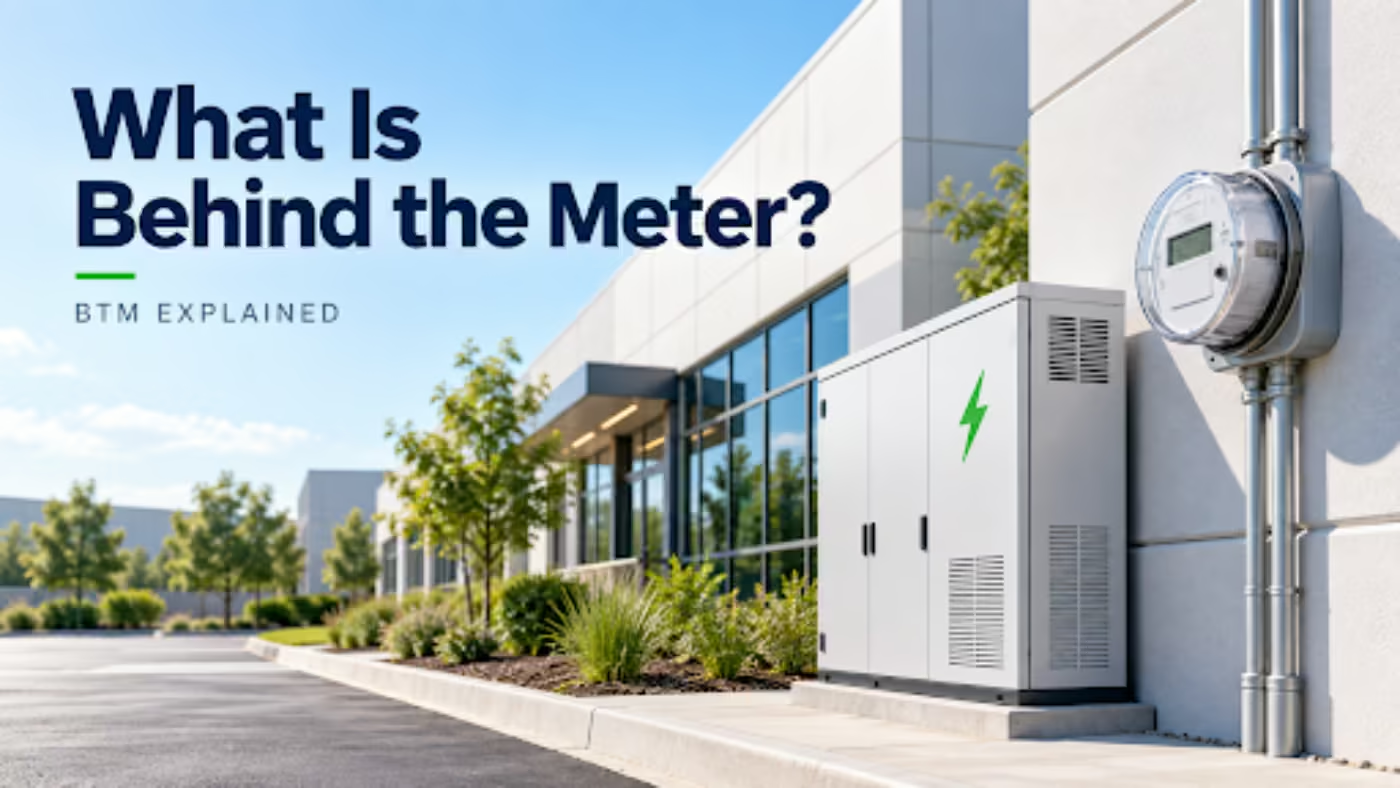
What Is Behind the Meter? Energy Systems and Examples Explained
Behind the meter means connected on the customer's side of the utility electricity meter. In energy discussions, the term usually describes equipment such as solar panels, battery storage and controls that serve a home, business or industrial facility through its own electrical system.
The abbreviation is BTM. A behind-the-meter battery, for example, connects so it can supply the site's loads and change how much electricity the site draws from the utility.
The term describes an electrical arrangement. It does not mean the equipment is hidden, physically placed behind the meter box or disconnected from the grid.
The national laboratory publication Behind-the-Meter Battery Energy Storage defines BTM storage by its connection on the customer side of the utility's service meter. Understanding that boundary makes the other terms much easier to follow.
What does the electricity meter measure?
The utility meter measures electricity passing between the utility supply and the customer's electrical system. Depending on its configuration, it can record electricity imported from the grid and electricity exported back to it.
It does not necessarily measure every movement of electricity within the building. Solar energy used directly by equipment on the same customer-side system may never pass through the utility meter.
For example, a warehouse might use electricity from both rooftop solar and the grid at the same moment. Its equipment receives the combined supply, while the utility meter records the grid portion.
The Department of Energy's distributed-energy overview uses household solar to explain this relationship between local generation and utility purchases.
Separate meters or monitoring equipment can measure solar production, battery operation and individual loads. “Behind the meter” does not mean unmeasured or invisible to every monitoring system.
Behind the meter vs front of the meter
Front-of-the-meter, or FTM, refers to resources connected on the utility side of the customer meter. These commonly supply electricity or services to the wider grid.
The System Advisor Model documentation distinguishes customer-side projects from utility-side projects, including how they interact with retail electricity bills and electricity markets.
These are typical distinctions, not absolute limits on what each system can do. A BTM resource may also support grid services through an approved arrangement.
Size alone does not settle the classification. A large battery can still be behind a facility's meter. The deciding question is how it connects relative to that customer connection.
Common examples of behind-the-meter energy systems
Behind-the-meter solar
A rooftop or ground-mounted solar installation can be connected to serve a customer's electrical loads. When production coincides with consumption, the site can use some or all of that electricity directly.
The panels do not have to sit on the building itself. The relevant detail is the electrical connection, not their distance from the roof.
Behind-the-meter battery storage
A battery stores energy and releases it later. It can be paired with solar or installed without solar, depending on the system design and permitted charging arrangements.
Storage changes when energy is available to the site. It does not create new energy.
Other local generation and flexible loads
Customer-side resources can also include small wind generation, combined heat and power, and equipment whose operation can be adjusted. Examples of flexible loads include managed EV charging and some heating or cooling equipment.
The U.S. Energy Information Administration covers distributed generation, storage and combined heat and power in residential, commercial and industrial settings. These resources can perform different jobs even when they share the same customer-side connection.
A simple example of behind-the-meter power flow
Consider a hypothetical commercial building with rooftop solar and a battery. The figures below describe power at one moment, not total energy over a day.
Assume all values are measured on the same AC basis and ignore losses for simplicity.
In the second row, the building still needs 300 kW. Solar supplies 120 kW, the battery supplies 80 kW and the grid supplies the remaining 100 kW.
The building has not reduced its equipment demand. It has changed the mix of sources supplying that demand.
These are illustrative operating snapshots, not a CleanDesign performance claim. Actual flows depend on available generation, battery limits, controls and the interconnection arrangement.
How does behind-the-meter battery storage work?
A BTM battery installation typically combines battery modules, power-conversion equipment, protective devices and controls. The controls determine when charging or discharging supports the chosen operating objective.
The System Advisor Model's storage guidance covers both standalone batteries and batteries combined with generation. Its customer-side models evaluate how storage interacts with a building's electricity use.
Common operating objectives include:
- Using more solar on site. Store available solar energy for later consumption.
- Managing electricity costs. Adjust grid purchases around the applicable tariff.
- Reducing peak grid demand. Supply part of a short high-demand period from storage.
- Supporting selected loads during outages. Provide backup where the installation is designed for it.
One battery may support several objectives, but they can compete for the same stored energy. Energy reserved for an outage is not simultaneously available for unrestricted daily discharge.
The electrical connection tells you that the battery is BTM. Its controls and operating plan tell you what it actually does.
Does behind the meter mean off-grid or backup power?
No. Many BTM systems remain connected to the utility and use grid electricity whenever local resources do not cover demand.
Off-grid describes a system operating without a utility connection. Backup capability describes what can remain powered when normal supply fails. Neither follows automatically from the BTM label.
A solar installation may be behind the meter yet stop supplying electricity during a grid outage. Keeping selected circuits powered requires suitable equipment and an arrangement that safely separates them from the utility network.
The Department of Energy's inverter guide explains that solar-plus-storage systems can operate without grid support when they are designed to do so.
For related application context, CleanDesign's microgrid support page describes coordinating local energy resources. A microgrid's operating capability and a battery's meter position are separate features of the electrical design.
Can behind-the-meter systems export electricity?
Yes, where the equipment, interconnection agreement and applicable rules allow it. BTM does not automatically mean “no export.”
Some installations use excess generation on site or store it. Others can send permitted surplus electricity through the meter to the grid. Non-export installations use controls designed to prevent that outward flow.
Export permission and export compensation are separate questions. A customer should not assume that exported electricity earns the same price paid for imports.
For a Canadian example, BC Hydro's self-generation programme allows eligible customers to generate renewable electricity for their premises while retaining access to the grid. The utility's specific connection and billing arrangements determine how that participation works.
Being behind the meter also does not remove approval requirements. BC Hydro states that battery systems require its approval even when they will not export electricity. Requirements elsewhere should be checked with the relevant utility.
Why behind-the-meter storage matters for EV charging
At a fleet depot, vehicle charging becomes part of the site's electrical demand. A stationary battery connected behind the relevant meter can supply some of that demand when required.
This arrangement can help manage how much power passes through the utility connection during busy charging periods. It still needs enough stored energy, output capacity and recharge opportunity to support the intended schedule.
The Department of Energy's behind-the-meter storage research examines combinations of buildings, solar, stationary storage and fast EV charging. Its analysis considers climate, building type and utility rates rather than treating every installation alike.
CleanDesign's EV charging energy management page provides practical context for combining battery storage with charging infrastructure. For a particular project, the electrical drawings must establish which loads and resources share the meter.
What affects the value of a BTM installation?
The label alone says little about savings. Two sites with identical batteries can achieve different results because their loads, tariffs and operating schedules differ.
The Department of Energy's utility-rate guide separates energy, demand and fixed charges. Changing grid purchases can affect those components differently.
A useful initial assessment asks:
- Which loads sit behind the relevant meter?
- When does the site import the most electricity?
- How much local generation is available at those times?
- What charging, export and operating limits apply?
- Is backup power part of the objective?
- Who controls, maintains and pays for the equipment?
Answering these questions gives “behind-the-meter storage” a clear operational meaning. It also helps avoid treating a billing strategy, an electrical connection and an outage requirement as the same thing.
.avif)
