

What Is Peak Shaving? How It Works and Why It Matters
Peak shaving is the reduction of the highest electricity demand placed on a power supply during a given period. At a grid-connected site, it usually means reducing the maximum power drawn from the utility by managing loads, using stored energy or supplying some demand from local generation.
Imagine several large loads operating together for a short period. The site’s electricity demand rises sharply, even though its normal demand is much lower. Peak shaving reduces the top of that demand curve.
The aim may be to reduce demand charges, manage a limited grid connection or reduce the peak load that local generators must serve. It does not automatically mean using less electricity overall.
The U.S. Energy Information Administration identifies peak shaving as one use of batteries, including helping commercial and industrial customers reduce electricity demand charges.
Peak demand and energy consumption are different
Understanding peak shaving starts with the difference between power and energy.
- Kilowatts, or kW, measure power: the rate at which electricity is being used.
- Kilowatt-hours, or kWh, measure energy: the amount used over time.
For example, equipment drawing 100 kW for two hours consumes 200 kWh. Equipment drawing 200 kW for one hour also consumes 200 kWh, but requires twice as much power while operating.
That distinction matters because a business electricity bill may include separate charges for energy consumption and peak demand.
BC Hydro explains that its demand measurement uses the highest 15-minute demand average recorded during the billing period. Other utilities and tariffs can use different methods.
A brief electrical surge is therefore not always the same as a billed demand peak. The duration of the event and the meter’s measurement method both matter.
How does peak shaving work?
Peak shaving starts with a target for the power drawn from the supply being managed. Controls then reduce demand on that supply when the site would otherwise exceed the target.
For battery peak shaving, the basic process is:
- Monitor demand. Metering shows how much power the site is drawing.
- Identify an approaching peak. Controls compare demand with a target and may use forecasts.
- Discharge the battery. Stored energy supplies part of the site’s load.
- Recharge when capacity is available. Charging restores energy without creating an unwanted new peak.
The facility’s equipment may continue using the same amount of power during the event. The difference is that some electricity comes from the battery rather than the utility.
The System Advisor Model’s battery dispatch documentation describes peak-shaving controls that account for forecast demand, available generation, battery capacity and state of charge. A target alone cannot guarantee performance if the battery lacks sufficient energy or output capability.
A simple peak-shaving example
Consider a hypothetical facility with a 400 kW grid-demand target. For one hour, its equipment needs a steady 600 kW.
A battery supplies the difference:
600 kW site demand − 200 kW battery output = 400 kW grid demand
The battery must deliver:
200 kW × 1 hour = 200 kWh
This is the energy delivered to the site during the example. The installed battery would need allowances for conversion losses, operating reserves, usable capacity and other design requirements.
Illustrative demand-charge savings
Assume the tariff charges $15 per kW per month, with billing demand based only on the highest measured demand that month.
- Before peak shaving: 600 kW × $15 = $9,000.
- After peak shaving: 400 kW × $15 = $6,000.
- Gross demand-charge reduction: $3,000 for that month.
These are hypothetical figures, not a utility quote or a CleanDesign savings claim. They assume every relevant peak is kept at or below 400 kW and no other billing rule sets a higher demand.
The calculation also excludes charging costs, battery losses, maintenance and equipment costs. It shows one bill component, not the project’s net savings or payback.
Peak shaving vs load shifting
Peak shaving and load shifting can work together, but their objectives differ.
Moving a load can shave a peak if it reduces the highest combined demand. However, moving the same large load to another hour could simply create a new peak.
Similarly, charging a battery overnight and discharging it during the day may help both objectives. The result depends on demand levels and the applicable rate periods.
The Department of Energy’s battery implementation guidance distinguishes peak shaving from energy shifting by its focus on reducing peak demand. Lower-priced electricity and lower billed demand are related opportunities, but they are not interchangeable.
Three ways to reduce peak electricity demand
Adjust when equipment operates
Some peaks can be reduced by staggering equipment schedules or avoiding unnecessary overlap between large loads.
For example, a facility might delay a flexible process until another finishes. BC Hydro identifies spreading out usage and staggering machinery restarts as potential demand-management measures.
The changes must still respect production, comfort and equipment requirements. Essential loads should not be treated as flexible simply because they are large.
Use battery energy storage
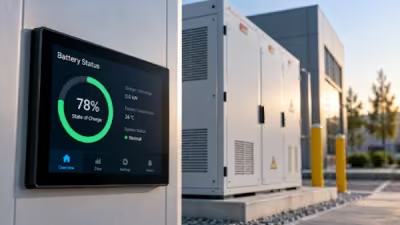
A battery energy storage system for peak shaving supplies power during the periods selected by its controls. This can reduce grid demand while allowing the supported equipment to continue operating.
The battery must be ready before the peak begins. Its power rating, available energy and permitted operating conditions determine how much demand it can cover and for how long.
Use available on-site generation
Local generation can reduce grid purchases while it is producing electricity. However, its output needs to coincide with the demand that matters.
Solar production, for example, may not cover an evening peak. Dispatchable generation introduces different considerations, including fuel use, operating costs and applicable operating permissions. Each source needs to be assessed against the site’s actual demand pattern.
What determines the battery size for peak shaving?
Two measurements are essential: the height of the peak above the target and the time spent above that target.
The height helps establish the required power output in kW. The duration and changing shape determine the energy needed in kWh. The Department of Energy’s storage overview explains this distinction between storage power and energy capacity.
Compare two hypothetical events:
- A steady 200 kW reduction for 15 minutes requires 50 kWh delivered.
- A steady 200 kW reduction for three hours requires 600 kWh delivered.
Both require the same power output, but the second needs twelve times as much energy.
A real sizing exercise also considers repeated peaks, recharge opportunities, battery ageing, reserve requirements and losses. Selecting equipment from the single highest kW value misses much of that operating picture.
Why the electricity tariff changes the outcome
A lower physical peak does not always produce an equal reduction in billed demand.
The Department of Energy’s utility-rate guide describes several demand-charge structures. Some depend on the site’s highest monthly demand; others apply during specified hours or relate to the wider grid’s peak.
Some tariffs also include a demand ratchet, which uses previous months’ peaks when setting current billing demand. Under such a tariff, reducing this month’s measured peak may not immediately remove the effect of an earlier high peak.
Before estimating savings, identify:
- The demand measurement interval.
- The hours and seasons when each charge applies.
- Any historical-peak or minimum-billing provisions.
- Energy charges associated with recharging the battery.
Peak-shaving analysis needs the actual tariff and interval data, not just the total amount on the latest bill.
Peak shaving for EV charging and microgrids
An EV charging site can experience high demand when several vehicles charge together. Battery support can reduce what the site draws from the grid during those periods without necessarily reducing the power delivered to vehicles.
The U.S. Department of Transportation’s rural charging toolkit makes this distinction between reducing grid demand and reducing charging demand. CleanDesign’s EV charging energy management page provides an application example of combining storage with charging infrastructure.
In a microgrid, the managed supply may include local generators rather than only a utility connection. Storage and load controls can help manage the peaks those generators must supply. CleanDesign’s microgrid support page describes the coordination of batteries, generators and renewable inputs.
The objective should be stated clearly: reducing a utility bill, managing a connection limit and controlling generator loading are different performance goals.
What to check before evaluating peak shaving
BC Hydro recommends understanding the site’s load profile to identify demand-reduction opportunities.
A useful starting review brings together a full year of available interval data, the tariff and operating schedules. Look for the timing, duration and frequency of peaks, then identify which loads caused them.
Also test less convenient scenarios. What happens if a peak lasts longer than expected, two peaks occur close together, or the battery cannot recharge before the next event?
Those questions help separate a promising daily pattern from a strategy that can work consistently across the billing period.


.avif)
